Pages

Monday, 29 March 2021

When does tea become high tea?


Some books reach you at just the right moment. They talk of things you know and love or spark ideas of things you’ll come to know and love. They contain characters and stories that are at once new and fresh and at the same time resound in your mind with a rightness that seems like familiarity. It is almost as though these books were written with you personally in mind. Henrietta’s House by Elizabeth Gouge was a book like this for me. I read it first when I was twelve or thirteen, that time when I was still gulping in all the fabulous richness of children’s books while also tipping a toe into the adult section of the library. Elizabeth Gouge was an author of a generation earlier, my mother had read her as a child, but you could find her books in libraries and second-hand shops and if you hunted there were some modern editions around. There’s a Christian focus in these books but not in the way of Victorian books. It’s woven around with myth so that it seems exotic and fascinating rather than dourly moralistic (though to be fair, there is a fair bit of lesson-learning).


There are only two children in Henrietta’s House and a lot of grown-ups, all with rather grow-up concerns. The two children, Henrietta and Hugh Anthony, don’t much like children, other than each other. It’s the story of Henrietta’s birthday picnic in the hills around the cathedral city of Torminster, of underground caverns and giants with their heart in paper bags, of early motor cars and dreams come true. I love the way Elizabeth Gouge threads fairy tale through the everyday, the contrast between the down-to-earth Hugh Anthony and story-loving Henrietta. But most of all I loved the house in the woods that Henrietta’s father secretly put together after long ‘what if’ discussions with her, complete with the library of the twenty books Henrietta thought every ten-year-old girl should own. Oh, and the part at the end when Henrietta is waiting at the house for everyone to turn up and they first lay out a tea party with the things they find in the kitchen and then gradually add things to turn it first into high tea and then into supper as time goes on. Oh the joy – I might have to go and read it again right now!

Sunday, 21 February 2021

Thirteen ways to end a chapter

While it can be tempting to keep on writing with occasional line gaps for changes of scene and time as Terry Pratchett did in his Discworld novels, it’s not really fair to child readers (or adult readers-aloud) not to have regular chapter endings. (In fact even Terry Pratchett's children’s books are divided into chapters!) One of my 'big picture' tasks when editing a first draft is to look at how the endings of each individual chapter are working and see how the chapter endings vary as the story progresses.

The most basic rule of ending a chapter is that it must encourage the reader to carry on reading. The obvious way to do this, of course is with a cliffhanger. But ending every chapter on a cliffhanger is exhausting and monotonous. The trick is to vary between ending the chapter with:

a feeling of disorder This is could be a huge cliffhanger or just enough to signal a coming dilemma or threat.

a feeling of order This will give the reader a feeling of closure, the idea that the plot has forward momentum and things are on their way to being sorted out.

There are all sorts of ways to break that down further, but here is my own list of thirteen ways to end a chapter. Some types of ending are conducive to a feeling of disorder, some to order and some work equally well either way.

1. Obstacle: a barrier to change or forward movement is presented (disorder)

2. Question: a question is posed by a character or the narrator (disorder)

3. Choice: a choice is presented or a decision must be made (disorder)

4. Mistake: a character (or the reader) realises that a mistake has been made (disorder)

5. Disappointment: a plan goes wrong (disorder)

6. Arrival: a visitor or message or movement to a new place brings either disappointment or hope (disorder /order)

7. Departure: someone leaving or movement away from a place brings either disappointment or hope (disorder /order)

8. Revelation: a character or reader learns or understands something (disorder /order)

9. Confession: one character reveals something that will bond or separate characters (disorder /order)

10. Door: an opportunity for change or forward movement is presented  (order)

11. Plan: a plan is formed (order)

12. Hope: things appear to be going in the direction the characters desire (order )

13. Reflection: a quiet moment usually following action sequence; possibly a statement by the character or narrator about the story’s theme (order )

Sunday, 31 January 2021

Searching for silence and stillness


My time is squeezed at the moment. From having no shape at all apart from what I imposed on it, my day is now divided up by other people’s timetables. I’m going to school every day. I’ve been a supply learning assistant for several years, but when I get asked to do it, it’s mostly too short notice and I have other things on. But just before Christmas I was asked to go and help in school when the new term started, and I thought, why not? I’m not going anywhere, nothing is happening. A week later, it was announced that the school wouldn’t reopen after Christmas. So I spent the Christmas holidays assuming that I wouldn’t be needed. But as it turns out, they do need me. The teachers aren’t coming into school, they’re doing all their teaching online, but someone needs to be there for the kids who need to come to school and one of the someones is me.


I thought about taking a break from my writing. After all, I have no deadlines, no one’s depending on me getting anything finished. But I had a plan and I hate to set aside a plan. So, I thought I’d try working very early each morning. I haven’t had a desk in our house for a couple of months since everyone came home, but if I got up and worked first thing, I thought I could get an hour at my old desk before it was time for its current occupant to clock in.


And so I got up, I fed the dogs, I made myself a cup of peppermint tea. I kept the lights dim in the kitchen; I switched on only the desk lamp in the living room. I sat at the desk with my tea and I started to edit chapter one of my rough first draft. Working first thing is not new for me. I’ve long grabbed my laptop from beside my bed, set a timer and let the words flow through my fingers for an hour. That time in the morning my brain is fluid. The ideas come and my inner critic is silent. I can write to a plan or I can write freeform. Just a little later in the day I find myself at the mercy of hunger or I find I need to tidy things away, do chores, organise things before I can settle to do creative work.


I knew that writing in the early morning worked for me. The question was would editing work? It’s a very different skill, after all. There’s problem-solving involved and you need that inner critic up and firing. That first morning when I turned on the desk lamp and started in on chapter one, I took it very gently. Just read it. Just comment. Don’t start with anything sweeping. And the happy answer is that yes, I can edit first thing in the morning too. It’s extraordinary. When my alarm goes off I simply sleepwalk through all the things I have to do. Ten or fifteen minutes later, I’m at the computer and I just fall straight into the manuscript, picking up where I was the day before. I hear the bin men, I hear the dogs moving around, the family getting up, but the door between me and them is shut and they don’t disturb me. I immerse myself in the words on the page, I question them, I move them about, I polish them; I find gaps and I fill them; I find waffle and I excise it. I give that manuscript my all until my timer goes off, then I shut down the computer and go and get in the shower. I don’t give the manuscript another thought until I’m at the desk the following morning.


I’ve been searching all through this year for physical and mental space to do my creative work in my busy, full household. I’m used to working in silence and stillness and there’s been very little of that here. But through this new turn of events I’ve found my silence and stillness. It’s a joy.


Wednesday, 30 December 2020

My top reads of 2020

I read 76 books in 2020. That’s a little more than I read in a normal year, but not much. I’m surprised actually – it’s been far from a normal year and I thought I’d have read more. I did watch the entire seven seasons of Buffy though, so that probably accounts for quite a bit of reading time… 


So, without further ado, my top reads of 2020: 


TOP NOVEL

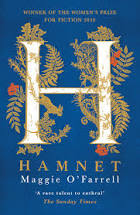
Hamnet by Maggie O’Farrell 


A book that sweeps you up and tears out your heart. I’ll tell you how good this book is: I read this right at the start of the first lockdown and it managed to fill my head totally with something other than You-Know-What. 


TOP CHILDREN'S BOOK


Friend Me by Sheila M Averbuch 


I was bowled over by this middle-grade thriller. Tense, thrilling and with an attention to detail that would put a lot of adult thrillers to shame, plus an emotional core hits home. Clever, very clever. 


TOP NONFICTION


A Sting in the Tale by Dave Goulson 


At the start of the year my family decided that we were each going to recommend a book for all the others to read. I would never have picked up a non-fiction book about bees of my own volition, but Dave Goulson made the subject entirely fascinating. 


TOP REREAD


The Amber Spyglass by Philip Pullman 


I got a Folio Society beautiful set of His Dark Materials from my family for my birthday. I used to love The Subtle Knife the most. In fact, I think the first time I read The Amber Spyglass I didn’t really understand what was going on, which seems odd now, as it’s absolutely clear and so magnificent. What books these are! 


TOP OLD BOOK


Wildfire at Midnight by Mary Stewart 


I spent several weeks at my mother-in-law’s when the first lockdown happened and started working my way through old books on her shelves. It’s been hard to pick a ‘top book’ from those I read, as I wouldn’t unequivocally recommend any. I don’t know why it comes as a surprise that books date. Of course, we all love books we’ve read years ago, but when we read old books for the first time nowadays… so much exposition, such slow build, not to speak of casual sexism, racism, treatment of children that ranges from bizarre to abusive… Of course they’re of their time, and that’s fascinating, but it’s hard to lose yourself in the story with all these alerts going off. The Mary Stewart book I’ve chosen is a mystery with a slightly supernatural air. It was diverting rather than gripping, but the Scottish countryside was gorgeously brought to life.  


Monday, 28 September 2020

Thursday's Child by Noel Streatfeild

Thursday’s Child was the first book I wore out. My original copy was a paperback with a photo from a TV series I never saw. I read it until the spine cracked and the pages came out in chunks and then I carried on reading it until it was a collection of small sections and individual pages that had to be handled with extreme caution. 

I suppose that the larger child here is Margaret who was dressed up as a boy to work on the canal boat, but if you picked up the book unknowing, you'd read the image as two boys. Seems an odd choice for the cover to me.

When my paperback Thursday's Child was finally impossible to read, my mother bought me a hardback copy, the very first hardback I had ever owned apart from a handful of Beatrix Potters. So now I had not only a book I adored for its story, but the first book I fell in love with as an object. Imagine the thrill of owning such a treasure! 

Look how much I loved this book - I covered the dust jacket with stickyback plastic when it started to disintegrate. And stop to appreciate the image of Margaret drawn by Peggy Fortnum who's responsible for the original Paddington Bear illustrations.

A number of books have held top spot for me over the years, but Thursday's Child probably held it for longest and has never been out of my personal top ten. What is it about this particular story? I think, for me, it’s the epitome of what I think of when I think ‘children’s books’. Feisty hero, no parents, thrown into situations where she has to fend for herself, protect others, form a team, while preserving her own identity with determination. Though most of my favourites have elements of fantasy or magic in them, historical novels like this tick the world-building boxes that suit me. And honestly, the things that Noel Streatfeild throws at Margaret Thursday barely give the reader pause for breath: an orphan with a mysterious background, a cruel orphanage, an escape to a canal boat, joining a travelling theatre, the discovery of long-lost aristocrats. And as the author speeds her characters through triumph and disaster, she takes the time to give even the minor players and the baddies real depth. 

I have loved almost every Noel Streatfeild book I’ve ever read – I can even forgive her for the much inferior sequel to this book because of course you have to write a book called Far to Go if you’ve written one called Thursday’s Child. I have a soft spot for Ballet Shoes and my copies of the Gemma stories show evidence of much rereading, but for me, if you could only read one of her books Thursday’s Child should be the one. 

This post is part of a collection of seven about children's books that I love. You can see the original post here, with links to all the books I've written about.

Sunday, 7 June 2020

Miniature World Building

When we talk about world-building in fiction, it sounds like something huge. We think Lord of the Rings or Game of Thrones with their great historical backstories, myriad characters and entire languages. Or we think of the intricacies of science fiction – creating believable alternate realities or different scientific laws. Then there are books like Watership Down, where Richard Adams spins a mythology and history around real rabbit behaviour. Where books that take the reader into other worlds work, they’re deep and involving, they never for a moment give you cause to stop and question their plausibility.

But world-building works on a small scale too.

One of my favourite childhood books was Five Dolls in a House by Helen Clare. I can’t tell you where it came from or who gave it to me. It seems like a book I always had.

My well-read copy of Five Dolls in a House by Helen Clare, illustrated by Cecil Leslie

You can tell right from the start that some serious world building is going on here. Many – perhaps most – books that take their world-building seriously will provide readers with a map. There’s no map in Five Dolls in a House. Instead, there’s a section of the house. Oh yes! It’s like a signpost to say, ‘Here’s the world you’re in right now. Focus on this.’ And how many times I flicked back through the pages to work out who was where at various points of the story, how often I simply examined the picture and wished I owned this house myself.

Section of dolls' house from Five Dolls in a House by Helen Clare, illustrated by Cecil Leslie


The premise of the story is that Elizabeth wonders what the dolls in her dolls’ house do when she’s finished playing with them and closed the front of the house. She peeks in the window but of course the dolls are just lying where she left them. Then all at once Elizabeth finds herself walking up to the front door of the house. This strange magic isn’t referred to at all; Elizabeth just accepts it without question and I, as a reader, went along with her. When Elizabeth meets the dolls she tries to explain who she is, and the dolls take her explanation that she owns the house and the fact that she already knows all their names to mean that she is their landlady.

Every detail of the dolls’ world is considered. They moan about how dreadful it is to live in a house where the whole of the front comes off sometimes. They have to pretend to have dinner because all the food in the house is made of plaster (Elizabeth remedies this with a chocolate biscuit and jellies). Some pet mice take up residence in the house and the dolls use them as horses to pull a little carriage (with disastrous results!).

It’s a joy! The characters are gorgeous – Vanessa, the eldest who is a terrible snob, Jane, the beauty, Amanda, clever and naughty, Jacqueline, the French paying guest, Lupin, who always goes about in her vest much to Vanessa’s disapproval, and the monkey who lives on the roof and is always making cheeky comments and causing mischief.

So much is packed into this short book. As with many chapter books for younger readers, each chapter is a complete story but the whole has a narrative that reaches a satisfying conclusion. Long after I was grown up, I did discover that there were sequels to the story, but I can’t bear to read them. For me Five Dolls in a House is a completely perfect miniature world and I don’t want to know any more.

This post is part of a collection of seven about children's books that I love. You can see the original post here, with links to all the books I've written about.

Thursday, 28 May 2020

The seven books I'm not posting covers of

I keep being tagged in those social media posts where you're supposed to put up a number of books you love or books that have changed you or just books. With no comment or explanation, they usually say. I suppose this is so that it doesn't seem like a hard thing to do. Maybe so that it provokes other people to comment. I've done this before, I always want to shout about books I love, but the tags are coming so thick and fast in the current situation - what else have people got to do but look back at books, movies, music, paintings that they love - that I can't bring myself to join in. And besides, I find I want to comment. I have things to say about books. I want people to hear them.

So I was lying in bed, thinking about what I might choose if I was posting seven books that mean a lot to me/changed my life/I want to share. I thought I'd need to browse through my bookshelves but actually seven books appeared in my head straight away. Of course, as a children's book nerd, all seven are children's books. I do read other things. I love many, many books aimed at adults, but I don't feel nearly as passionate about them as I do about the children's books I love. Why would that be? Is it because the books I loved as a child stood out more because the pool of all the books I had read was smaller when I read them? Is it because I wasn't consciously looking for books that were like books I'd already enjoyed, so that finding these was a joyful happenstance?

I'd be interested to know if adults who don't read children's books have stand-out books from their childhoods that they would consider including in a list of favourites. As us children's writers know, many adults see children's books as less worthy than books aimed at adults. I think if anyone who had been a reader since childhood gave it some thought, they would easily put their finger on a few stand-out books from their childhood.

So here are the seven books that sprang into my mind.


What can I say about them? They seem distinctly 'girly' to me, but that could be to do with the era in which I was a child. There's a clear progression in when I took up each as 'my favourite book'. But somehow even when I championed a new one, all the others still remained 'my favourite'. The order is:


So I thought, instead of just showing you covers, I'd tell you why I love these books. I've already written about most of them on this blog. You can click on the titles above to see what I had to say.  The rest I'll write over the course of the next few weeks. There isn't after all anything much pressing to do at the moment.