Pages

Sunday, 10 March 2024

All aboard for Book Week!

I spent just fifteen minutes with my author hat on in school this week, but I spent many, many hours engaging with children and teachers and books. The reason: the Wallace Hall Primary Book Festival.


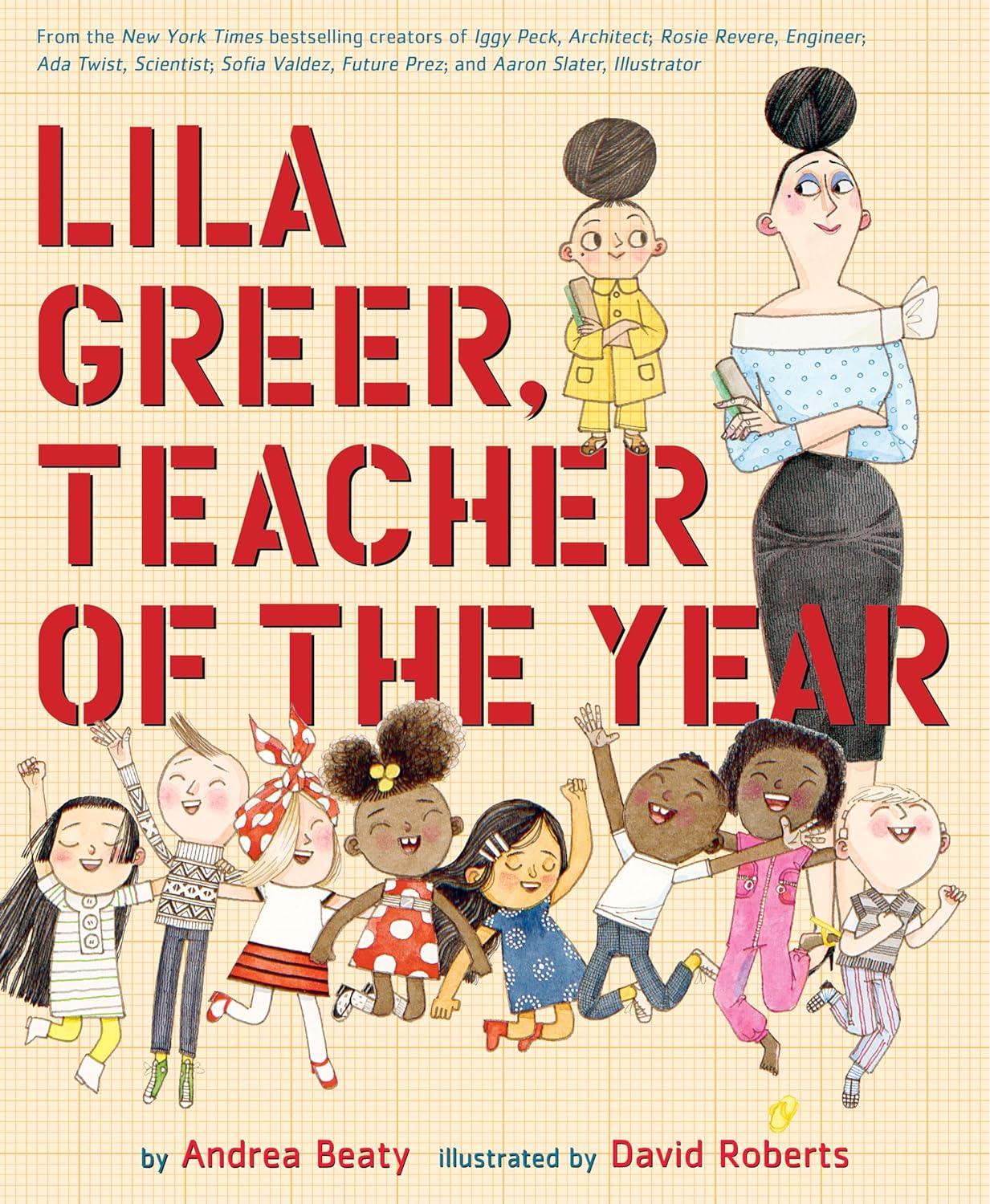
For the past couple of years I’ve been working a couple of days a week as a learning assistant. Schools are very good at making use of the talents and enthusiasms of their staff, so it didn’t take WHP long to realise that I am the woman to talk to about children’s books. Last year, I was away the week of World Book Day, when the school runs a literacy week (but I was on a writing retreat). This year, one of the teachers and I planned a week-long school Book Festival based around the Questioneers picture book series by Andrea Beaty illustrated by David Roberts. 


Each class took one of the books, which feature a scientist, an illustrator, an illustrator, an engineer, a teacher and an activist, and their class teacher based class activities around that book. P7 were off on their residential trip for half the week so they missed this part.


Each day of the week we held book-related activities:


On Monday, we had shared reading, with children from higher up the school going into lower classes to read with children.


On Tuesday, we had Speed Book Sharing, where the class sat in two lines facing each other and each child had 30 seconds to share a book they loved with their partner before moving on to the next person. We also ran a sponsored read on this day with children collecting money for time spent reading, proceeds to go to new books for the library.


On Wednesday, we had a Dress a Potato as a book character competition. Children were wildly enthusiastic about this and we had some amazingly creative entries. In the afternoon there was a parent open day, so parents came in to share classroom activities with children and view the competition entries.


Thursday – actually World Book Day – I wasn’t at school (and I needed the day off after all the running around!). Classes visited the local library for storytime.


On Friday we had an all-school IDL activity inspired by Andrea Beaty’s characters Rosie Revere, Engineer, and Iggy Peck, Architect. Small groups of mixed-age children were given missions to design and build for different fictional characters, such as a hot air balloon to carry Goldilocks out of the forest, a waterproof boat to carry the Gingerbread Man across the river and a wolf-proof house for the Three Little Pigs.


Running alongside all this, in the corridor there was competition in the corridor to match teachers to their favourite children’s books. Tricky, but lots of fun!


And my 15 author minutes? I spoke to one of the classes about how to plan a story. Always a good one.


So now we have to plan next year’s Book Festival. I don’t know how we’re going to live up to this one!

Thursday, 8 February 2024

February resolution update

Following on from last months' resolution, here's a brief summary of how it's going so far.


Books read last month: 9

Rearead from my shelves: 3

Loaned by other people: 2

Audiobook from library: 1

Bought secondhand: 1 (last year so I'm not counting this as a cost)

Gifts: 2

Total spent: 0


Clothing items bought: 0

Clothing items mended: 1 (though it wasn't actually mine)


Clothing items sewn: 0

Total spent: 0


Gardening items bought: 0

Times I went in the garden and did anything that could be called gardening: 0

Total spent: 0


Friday, 5 January 2024

Happy new resolution...


Targets are in frustratingly short supply when most of the work you do is for yourself. But I like targets and so I set them for myself. I predict and record the amount of time I spend on different pieces of work; I set schedules and generally stick to them; I write lists with little checkboxes next to them, weekly ones and monthly ones. I may, in fact, like targets too much.


So it will come as no surprise that I like resolutions. A resolution is a just a target by another name: I will do this, I will not do this, I will achieve this quantity of something, I will reach this position.


I prefer resolutions that are measurable. In the past I have resolved to:


·      write 500 words a day for a year (twice, achieved both times)

·      run 1,000 km in a year (twice, but didn’t make it in 2023 because of hideous lurgy)

·      make a new recipe once a week for a year (this was great, really turned me back onto cooking after too many years of cooking dull food that children would eat)

·      not buy any books (interesting, lots of rereading and started using the library again – and allowed myself an exception for the books of friends)


This year’s resolution is less easy to measure. I am resolved to ‘tread more lightly’. I have probably put that in quotes because even to me it sounds a bit airy-fairy. What do I mean by it? I mean that I intend to think more carefully about everything I buy, use and consume in order that my presence here on the planet has a smaller impact than it did previously. This isn’t a new thing. We’ve been considering our diet for a long time, we have an electric car and a green energy supplier. Although I’ll be trying to consider every aspect of our lives, I’m going to focus on three areas where I know I’ll be tempted by lovely shiny new things.


1.     BOOKS

Of course books. It is so easy to spend money on books. And it’s my job. I can always justify spending money on them. But. I can borrow, form other people and from libraries (though the libraries where I live are sorely under-resourced). I can buy second-hand (mostly from WOB who give authors a (very small) royalty on second-hand sales). If I buy new books I can consider audio or digital in order to save on paper, particularly if it’s something I’m never going to read again. 


Last year’s spend on books (not including presents for other people): £391.76


2.     CLOTHES

Nothing like new clothes to make you feel good about yourself. I buy fewer clothes than I used to and I wash them less frequently and mend them more. But this year I will aim not to buy any new clothes unless I can’t see how to do without them or obtain them in any other way. I’ll look at buying second hand though I’m not sure about shoes. I probably don’t need any shoes anyway. I expect I’ll still be buying underwear and tights. I’ll finish the sewing project I have hardly started and I’ll alter the things I made recently that I haven’t been happy about. There’s no point in having clothes I don’t or can’t wear. To this end I’ll also look through and see if I have other things that could be altered. If I can master putting pockets in, that’ll bring several pocketless garments back into circulation. I will not buy any more patterns or fabric or wool until I’ve finished the things I’ve already got! Some mending is going to be difficult – my coat has frayed sleeves – but I’ll try with mending before I give up and get a new one.


Last year’s spend on clothes: £636.12


3.     GARDEN

I could easily not buy more plants. I could grow most things from seed and work out how to propagate from what I have already. But you don’t just want to have the same things everywhere in the garden and the new pond area (when we get round to it) will need entirely different plants. So I should find an alternative source of plants grown locally and without peat, like church fetes. I don’t know what to do about compost though. I feel I need it to grow seeds. I can’t make enough of my own and it’s not fine enough for seeds. Is there another way to get it rather than in plastic bags from the garden centre?. I’ll stop getting Gardener’s World magazine too, because although it costs me nothing with Tesco clubcard points, I look at a couple of articles and the special offers, then take out the free seeds before I throw it away. Definitely a waste of paper.


Last year’s spend on garden: unknown because up to now I’ve lumped it in with the house spend.


The way to measure all this is probably to keep a note of what I consume in these areas and how I consume it – did it cost money, did I make it myself, did I borrow it, was it second hand? (Oh good! More spreadsheets…)

Wednesday, 22 February 2023

The Great Roald Dahl Debate


Roald Dahl is in the news. Even people who generally have no interest at all in children’s books have noticed. Just in case this has passed you by or you’re reading some time in the future when the whole five-minute furore is in the past, here’s a quick summary:

Roald Dahl’s books are being rereleased with edits intended to make them more acceptable to a modern audience. The reactions – from all sorts of people, including Philip Pullman and the Prime Minister – have varied from ‘You must never touch a word of a writer’s published work’ to ‘Fantastic, now children will not be exposed to Dahl's racism, body-shaming, misogyny, etc’ and ‘Couldn’t they just publish the originals with footnotes and an introduction?’ There has also been ‘Why bother? There’s nothing special about Dahl.’

Should they meddle with an author’s work? I see no reason why not. The author is dead so has nothing to say about it. His estate is perfectly happy with the changes (and the financial reward). It’s nothing new. Children’s books have been published in updated versions forever. Netflix has acquired the rights to Dahl’s work. Of course they want to make money from the books. Their press-release called the books ‘Timeless Tales’. It’s probably impossible to make a book timeless, but here they are, making them up-to-date.

I enjoyed Dahl’s books as a child. My now grown-up children liked Dahl. The BFG is my favourite. They liked Danny the Champion of the World and Matilda. They adored The Enormous Crocodile. I do not remember finding anything particularly uncomfortable in Dahl as a child. It fitted with the cartoons and sitcoms I watched on TV. But the world has moved on. We do not offer children cruelty and othering and call it humour. (Well mostly we don’t.) Toning down these aspects of Dahl will make his work fit our twenty-first century children’s book model better.

Could the publishers have added footnotes and an introduction instead? Of course they could have. And if parents or teachers were reading the books to children, these things would have been discussed, no doubt, though quite probably a parent or teacher might have commented or changed words and ideas that troubled them as they read the old versions. But here’s the thing: most children would not read footnotes or an introduction. And if they did, they would be drawn out of the story, which is something you really don’t want to do to child readers.

The good thing about Dahl is that children want to read his books. The books have bold, lively heroes and memorable baddies, shocking disasters and soaring triumphs. Children are dying to turn the pages and find out what happens. When they’ve finished one of Dahl’s books, they feel satisfied by the story and they want to pick up another. This is how children develop reading fluency – by finding books that they don’t want to put down. When my eldest daughter was six, she brought home from the school bookfair two of the Rainbow Fairy books. She wasn’t a fluent reader at the time so I read the first one to her. The second one she read a page and then I read a page. She loved those books. I found them plodding and predictable. So when I discovered that she’d bought a pack of five of them with a book token I refused to read them. She took a week to read the next one on her own. Then two days for the next one. Then one a day until she’d read them all. I’m not going to argue for the Rainbow Fairy books’ place in the canon of children’s literature, but they have a purpose and they serve it well. They can turn children into readers. And so can Dahl.

But here’s the thing. So can many other books. New books, books with modern ideas, diverse characters, current language. Books that take place in a world today’s children recognise and engage with problems, ideas and circumstances that concern them. And no, I don’t just mean issue-driven books set in a contemporary world. Fantasy, historical, sci-fi, humour – all sorts of stories are different today.

That’s not to say that children shouldn’t read children’s books from the past. I would never say that! So many wonderful, brilliant books full of amazing stories exist for children to find and adults to share with them. Children need choice just like adults do – more so, because they’re still working out what types of books suit them.

The problem with children’s books is – as it ever was – that the books are bought by adults on the whole. Adults who don’t know anything about children’s books will go for the easy option – the book they recognise from their childhood, the book by that famous bloke off the TV. And the marketing people recognise this, so they push those books. It’s an obvious win. You own a property. There’s an easy market for it. The cost to the publisher is minimal. You just change the covers, print a bunch more and there they are on the shelf looking fresh and new. If you wander into WHSmith you won’t see a shelf full of books by a single author that are 40, 50 or 60 years old in the adult section. But there in the children’s section is a whole shelf of Dahl … and another of Enid Blyton (who has undergone her own modernisation more than once). And it’s not just bookshops. A lot of school libraries rely heavily on books donated when children have grown out of them. Their shelves are groaning under the weight of Dahl.

So here’s what I think. If we have to have Dahl, let’s have updated Dahl. But let’s have lots of exciting new books front and centre too. Please, marketing people, think about how you are serving the children who learning to be readers when you constantly cash in on old books. Concentrate instead on what would serve them best in their journey to becoming readers and then work out how to market those books to the adults who buy books. Give children choice.


*Please note that this piece is my personal view.


While you're here, do take a look at my gorgeous book, Snippets.


For a taster tale, you can read a Snippets story that's not in the book here.

You can get a copy of Snippets on Amazon or if you’d like a signed copy send me a message on Twitter, Instagram or Facebook. 


Wednesday, 28 September 2022

Writing Diary: September 2022


I’ve been writing a time-travel story.

Ah! you say. Science fiction.

But is it?


I’d say there’s not so very much distance between the type of world-building I’m doing around time travel in this book and the world-building I did when I was writing about a family of witches.

It’s about creating a system that the reader can believe in.

I did spend some time reading some science about time travel. It’s very complicated and my understanding is totally superficial, but what I gleaned is this: time travel is probably impossible and even if it were possible (which would take unfathomable amounts of energy), you’d only be able to travel into the past and you couldn’t return.

No one has yet settled on one definition of science fiction (or indeed any other genre) but most interested parties agree that the science involved should be a possible development of actual known science and that you can’t ignore established science unless you can work out how to explain it. By these parameters, my book is far from science fiction.

I read a LOT of time travel in preparation for writing this book. There are books which are very sciency; there are books that are not sciency at all; there are books somewhere in between. I love them all. The idea of time travel thrills me.

If I were forced to pigeonhole my book, I’d say it is fantasy. Can I call it science fantasy?


So.

Time-travel world-building turns out to be very complicated.

You need a means of time travel: a machine or a portal. It could be something that’s been created for the purpose (or for another purpose with time travel as a side-effect) – that’s a more sciency sort of time travel. Or it could be some mysterious or magic process – that’s fantasy.


Then there are the rules:

How does time spent in the past or future relate to time in the present? Are they equivalent?

Is it possible to communicate with people from your own time?

Can you change the past? What happens if you do?

If you can’t change the past, how does it feel to be in it?

Can you meet yourself in a different time?

What happens if you die in the past?

Can you bring objects from one time to another?

How does it feel to time travel? What happens to your body?

Is it a secret? Why? Whose secret is it? What will happen if people find out?


In a well-written time travel story, in fact in any well-written story with complex world-building, information and rules are fed into the story at such a pace as not to overwhelm the reader. But writing complex worlds is a different matter. There are so many questions to be answered, so many decisions to be made, and it’s really useful to have the majority of them sorted at a very early stage.


But in the end, you also have to keep in mind that however elaborate and fascinating your world-building is, no matter how key it is to the plot, it’s never going to satisfy your readers without a great human story at the heart of your novel.


My new book, Snippets, is available now.


For a taster tale, you can read a Snippets story that's not in the book here.

You can get a copy of Snippets on Amazon or if you’d like a signed copy send me a message on Twitter, Instagram or Facebook. 

Go to https://ko-fi.com/clairewatts to read a new Snippets story every month. It’s free, but you can support me with a donation if you like.


Sunday, 31 July 2022

Writing Diary: July


This month I left my agent. We’ve done some good work together but the relationship didn’t seem to be getting me anywhere, so it’s time to find a new champion.

Submitting to agents is one of the less fun parts of being a writer but I think I’m better at it than I was. For one thing, I have more knowledge about what an agent is looking for, which helps me to shape my approach letter. Secondly, I feel more in charge than I used to. True, an agent is one of those ‘gatekeepers’ that the industry talks about all the time. You (mostly) need one to get your book on the road to being published. But agents need authors. They need books, they need ideas, they need talent. A great agent may be looking for specific books that they know they can sell, but they’re also going to be keeping an eye out for an idea that comes at them from out of the blue. Some agent out there is looking for me.

So I write my letters. I read up on various agents to find ones who seem to be interested in books like mine, who have profiles that appeal to me, whose Twitter feed I enjoy, who I’ve come across personally or know of through friends. I tailor my submissions to whatever their particular format is (they’re all different: 3 chapters/5,000 words/10 pages; attachment/body of email; synopsis of 1 page/500 words/300 words; blurb; list of published works). I think carefully about why I’ve picked this particular agent and craft a charming sentence at the end to make it personal.

It's kind of like internet dating…

So now I’m thinking, if it’s like dating, I ought to be compiling my own list of what I’m looking for in an agent. So here it is:

1. Someone who is a champion of my work, who loves what I’ve written and is certain that publishers and readers will love it too.

2. Someone who is interested in my whole career, not just this one book:

• who will consider all the manuscripts I have written and discuss with me whether they’re worth spending more time on.
• who will guide me when I start out on a new project.
• who will bring me ideas that they think would be sellable.

3. Someone who will take on both my fiction and my nonfiction.

4. Someone who will give me brilliant editorial feedback that will help me improve my work.

5. Someone who will reply to messages from me promptly and check in on me regularly.

6. Someone who knows how to read what’s going on in the industry and how to get the best deal for me (and themselves).

7. Someone who is professional and but also feels like a supportive friend.

So now I wait. Between 4 and 16 weeks, so the submissions pages on their websites say. I could do more submissions but I think I’ll wait and see what comes of this batch of five. Maybe I’ll decide my letters need tweaking. Or my synopsis. Maybe all five will want to see my book. That would be interesting. Maybe I’ll have a meeting with more than one agent and I can use my list to interview them for the job of Best Possible Agent for Me.

Watch this space.


My new book, Snippets, is available now.


For a taster tale, you can read a Snippets story that's not in the book here.

You can get a copy of Snippets on Amazon or if you’d like a signed copy send me a message on Twitter, Instagram or Facebook. 

Go to https://ko-fi.com/clairewatts to read a new Snippets story every month. It’s free, but you can support me with a donation if you like.


Tuesday, 12 July 2022

I dream of ... a library


I was recently doing a writing exercise about things I hoped and dreamed about when I was a child and how I felt about those hopes and dreams now. One dream was that I wanted to be a writer. Tick, done that. I dreamed of having a dog. Yup, done that, and I was right – it’s the best. I dreamed of owning a huge gothic house with a morning room and a drawing room and secret passages and servants’ quarters and many bedrooms called things like ‘the rose room’ and ‘the lilac room’. I don’t think that would suit me particularly now – too much cleaning, too many decisions about decorating and I bet the plumbing would be no good. Oh how the practicality of middle age stomps upon the fantasies of childhood!

One dream I held onto longer than most was the dream of having a library. You know, one of those that you see in movies, with books around every wall and a library ladder (I adored the scene in Bednobs and Broomsticks when Miss Price is up the library ladder looking for a particular magic book and the guy – forget his name – is pushing her around and singing). I was entranced by the idea of floor to ceiling bookshelves packed with books, ideally all hardback because if you could, why wouldn’t you? There’d be big comfortable chairs everywhere, the kind you can curl up in, one by a wide light window at one end and another by a grand fireplace. A sofa too, long enough to lie down on, not too firm. There’d be a table or a desk. Nowadays, I’d have to add in good reading lights all over the place, of course. I loved it when I visited grand houses open to the public and went into a library where books with leather covers and gold writing were housed behind glass doors. Yes, I thought. That’s the dream.

And now? I have a lot of books in my house. Being surrounded by books makes me comfortable. When we first moved here, for years some of my books were in boxes and I can honestly say that I never felt more at home than when at last we had enough bookshelves for all my books. There are bookshelves in every room here apart from the bathrooms. Some of the books I have had for a long time. Some are just passing through. When I finish reading a book, sometimes I find a place for it on the shelf, sometimes I put it straight in a bag for charity. It’s not necessarily about whether I’m going to read it again or whether I’m going to lend it to anyone. I keep books because they’re beautiful, because they were given to me by particular people, because I think they have some kind of importance, because they’re part of a set. If the decision’s not clearcut, I keep them. They may go in a cull later on.

A cull? Yes. In an ideal world, my bookshelves would not be packed floor to ceiling. There’d be a little room here and there, a space to welcome more. And to achieve that, not only do I give away the books I’m not going to read again, but I also have to be ruthless about weeding. It’s those ones I wasn’t sure about in the first place that go first, along with the ones my husband hasn’t actually thought about (he wants to keep everything, as though our bookshelves were infinitely expanding). Then I have to think about the rest. Sometimes something I’ve kept for years suddenly becomes dispensable. Occasionally I discover a space where I can fit new bookshelves and then, for a while, all the books can breathe and settle because there’ll be no need to cull for a while.

So would I like to have a library? Yes. I love the idea of a big room – both light and cosy – where I would be surrounded by books. It would be full of books I value for one reason or another and I would know just where to lay my hands on any particular book. But they wouldn’t be packed tight; there would always be space for more. The more I think about it, the more I think that it wouldn’t just be a library, this room. It would have to be my living room because why would you want to go anywhere else? (Do I put a TV in this fantasy library? Depends on how many other rooms I’ve got in the fantasy house.)


My new book, Snippets, is available now.


For a taster tale, you can read a Snippets story that's not in the book here.

You can get a copy of Snippets on Amazon or if you’d like a signed copy send me a message on Twitter, Instagram or Facebook. 

Go to https://ko-fi.com/clairewatts to read a new Snippets story every month. It’s free, but you can support me with a donation if you like.


Thursday, 30 June 2022

Writing Diary: June


I wish I could harness the flavour of energy I give to my garden in my writing. Both require a combination of knowledge, creative flair and work. In both, you’re working within boundaries: your soil, climate, aspect; form, audience. Both throw up frustrating challenges that set you off course: slugs, frost, disease, inexplicable death; blocks, lack of break-through, poor sales, lack of focus. Both require bouts of solid toil and constant tinkering.

I came to gardening gradually. It was no great passion at first. I had a flat; it had a garden. Gardening was part of doing up the flat, then it was part of the housework. But it grew on me. We moved to the country and rented a house which had been a farmworker’s cottage. No one had ever done anything to the garden that cost any money. There was grass; there were damson trees. We rotavated, grew vegetables, put up playthings for the kids. I grew things in pots, things I could move to a house that we owned. Then we bought the house. The following spring we planted tiny sticks that would become a hedge and little bendy trees. Gradually, gradually over the years, I’ve dug beds, added more trees, put in a patio and paths.

I find it quite easy to take the things that don’t work out in my garden with equanimity. Lovingly nurtured seedlings chewed to nothing by slugs overnight: oh, well, start again with something slugs like less. Camelia not quite the right colour when it finally comes into bloom: no problem, wait until autumn and move it. I can look at my garden with pleasure even while assessing all its imperfections. When a combination of plants turns out to be just right, I’m thrilled. When something’s less than perfect, I look at it calmly and I make a plan. When something’s coming on slowly, I enjoy the suspense. I don’t care that it’s never going to be a show garden. It’s mine, I made it and I love it all.

Writing isn’t like that for me. I’m after perfection and I want it right now. When something isn’t working right I worry about it, I lie awake trying to puzzle it out. I’m reluctant to give up on things that may not be working because it seems like a waste of my previous work. I can’t be calm about it. I want to get to the end and then I want other people to see what I’ve done and think it’s fabulous.

Maybe that’s the difference. I’m treating my writing like a show garden. I want it to be perfect and weed-free with everything in the right position, perfectly in bloom. I want it to be finished. A real garden is never finished and so there’s no pressure in it. I don’t want to write with no end in view the way I garden – I’m always going to aim to finish a book and have it enthusiastically received by an audience. However, I’d like a little more of my mellow gardening energy to feed into my writing – embracing the puzzles and the setbacks, calmly setting about working out how to improve things, accepting that sometimes some things just don’t work and now and then sitting back to take a look at what I’ve done and being happy with it.


My new book, Snippets, is available now.


For a taster tale, you can read a Snippets story that's not in the book here.

You can get a copy of Snippets on Amazon or if you’d like a signed copy send me a message on Twitter, Instagram or Facebook. 

Go to https://ko-fi.com/clairewatts to read a new Snippets story every month. It’s free, but you can support me with a donation if you like.


Tuesday, 31 May 2022

Writing diary: May

I’ve been pottering along working on the same book since the beginning of the year, going more and more slowly. I started the year with a very full plan and then wrote every day, first by hand and then typing up what I’d written. This was a lot of work, but I thought it was cutting out a stage of drafting by making me really think about what I’d put down on paper as I typed it. However, I think now that there’s something larger at stake with the book, a fundamental thing in the plot that I thought was minor but which is actually right at the heart of it. What this means, I think, is that before I am done with this first draft I need to examine one particular central adult character and their motives and see how this links in with the plot and even more importantly with the central child character and their actions.

This realisation is kind of a back-to-the-drawing-board moment. It’s daunting and makes me question the whole premise of the book. However, I think these are often the moments from which the best ideas are born. This is when you, the writer, realise what the story is trying to tell you. Of course, not all stories necessarily need to tell you anything, and what this particular story tells me may not be what it tells my reader, but the story has to work for me first.

I’m not sure what the best way to go about examining this character is. I think probably to start with I’ll read what I’ve written and make some notes about her motivation and character. I’ve started doing this already, but I was considering lots of other elements at the same time, so I haven’t been consistent. I think at the moment this character starts out being one kind of person when you only hear about her and then when she appears in person she seems rather different. Then I’ll have to set out to answer the questions I’ve raised. Or possibly I could write from her point of view telling the story of what happened to someone else. I don’t generally like writing extra bits that I know will definitely not be part of the finished book, but – hey ho! – sometimes you’ve just got to do it. The other thing that can work for me is to talk it through with someone else. At least, that usually works for plot – talking sparks ideas for smoothing out plot knots. I don't know if it would work for character.

In the meantime, the new idea that’s edging into my mind seems so much more appealing than slogging away at this one. I don’t really know anything about this idea, except that it’s historical and to do with fear of nuclear war. A friend of mine who tells me she never throws away anything printed that comes into her hands lent me a copy of the original Protect and Survive booklet from 1980. Honestly, it makes my head spin. Did the government actually believe the advice they were giving would protect anyone? Was this what scientists were telling them? 

What seems extraordinary to me now is that I lived through this period and simply didn’t think about it. I had other existential worries – I suppose most teenagers do – but I guess I must have trusted that governments would not be so stupid as to blow each other up. What a dope!


My new book, Snippets, is available now.


For a taster tale, you can read a Snippets story that's not in the book here.

You can get a copy of Snippets on Amazon or if you’d like a signed copy send me a message on Twitter, Instagram or Facebook. 


Go to https://ko-fi.com/clairewatts to read a new Snippets story every month. It’s free, but you can support me with a donation if you like.


Monday, 9 May 2022

Reading children’s books and childhood reading


Of the twenty-seven books I’ve read so far this year, fifteen were children’s books. I read a lot of children’s books, mostly because I find them satisfying, but partly, of course, because I’m interested in how and what other children’s writers write. Do all children’s writers feel this way? I would be surprised to learn of any writer who didn’t read a good deal in their own area of work, suspicious too of their reasons for writing for a particular market if books of that ilk didn’t interest them. I suppose some maverick genius might manage to write a perfect book for children or a perfect romance or a perfect thriller without ever looking at an example of the type of book they were writing. It just doesn’t seem very likely.

Three of those twenty-seven were books about children’s books – there’s a whole world of writing around children’s books once you start looking: writing craft, criticism, history, memoir – plus articles and reviews. And when you can’t summon up the energy for an actual book there’s kidlit Twitter. I follow a lot of people who are engaged with children’s books and to be honest I would have given up on the shouting match and sales pitch that makes up most of Twitter long ago if it weren’t for this entirely wholesome and knowledgeable community.

I fell upon another rather fascinating thread on Twitter when Sophie Anderson (@sophieinspace) mentioned that she would not recommend the majority of the books she read when she was a child to children of today because there are so many brilliant more relevant texts available and many of the ‘classics’ pushed on children are racist and sexist. I understand where she’s coming from, but as ever it’s a matter of who is introducing reading matter to children. Most adults are not particularly interested in children’s books. They can’t be expected to know what is current and relevant. What they know about children’s books is based on books they knew and loved as a child and what the supermarket and the display tables in bookshops are shoving at them. Most primary school teachers can scarcely keep up with all the demands of their jobs, let alone manage to become well-read in the latest children’s books. For all these reasons, of course people keep sharing ‘classic’ children’s books with children. I think there’s probably also a tendency to think that these books have stood the test of time so they must be good and that, since they are classics, they must be ‘safe’. None of which is necessarily true. Reading possibly problematic old books with a child and sharing problems in them is one way forward, but I think really the best thing is to give children lots of opportunities to choose for themselves. Learning to look at book covers and blurbs to help you decide if a book will suit you is a skill. So is choosing to read something new and then deciding that it doesn’t suit you. This is, of course, where a well-stocked library comes in. *sigh*

All this led me to think about my own reading choices as a child and who and what influenced them. 

What there was in the library mostly dictated what I read. I didn’t own a lot of books but my mother took us to the library every week. Occasionally she’d point out something there she’s enjoyed as a child (that’s how I came to Elizabeth Gouge) but mostly it was just me and the shelves.

I read all the classics, What Katy Did, The Secret Garden, Anne of Green Gables, every Nesbit I could get my hands on, influenced largely by BBC serialisations, I think. There was modern stuff too, Helen Cresswell’s Lizzie Dripping, I think Tom’s Midnight Garden and The Borrowers. From the cinema, I came to all the Mary Poppins books, so much stranger and more mysterious on the page.

One very strong memory is of a serialisation of Elidor on the children’s radio programme which was all we had by way of English language media when my father was based in Germany. It was mind-blowing and led me to the rest of Alan Garner.

When I was about eight, a friend of my mother’s who reviewed children’s books came to stay, bringing me a stack of new paperbacks, eight or ten new books all at once. It was glorious. The only one I have left is the rather wonderful The Saucepan Journey by Edith Unnerstad. I think this is the moment I started wanting to own books. After birthdays and Christmas I would head straight for a bookshop. And oh, the joy when I discovered a local second hand bookshop – a big pile of books for scarcely any outlay, lots more classics because they’d be in hardback which, to my mind, meant they must be superior.

The only influences I remember from teachers was when we listened to a recording of The Lion, the Witch and the Wardrobe which led me to the rest of Narnia and another teacher lent me a book called Well Met By Witchlight by Nina Beachcroft when I missed her reading the end (I tracked this book down a year or so ago and it wasn’t nearly as good as I remembered, but it was a huge influence on the direction of my childhood writing).

Then there was my friend Miranda. Her mother knew a lot about children’s books somehow. Through her I found K M Peyton and Barbara Willard at just the moment that I was tiptoeing around the edge of adult novels, because British publishing was still only toying with YA back then. 

So back to the question of whether I would share classic children’s books with children. Personally, no. I take great pleasure in buying books for all the children in my present-buying sphere. I like to share new and interesting books they may not have come across. I wouldn’t stop a child from reading classics, but I’d let them arrive at them for themselves. Direction is great and if there are knowledgeable teachers, librarians and family who can direct a child to their next favourite book, fantastic. But failing that guiding hand, what they need is plenty of choice.


My new book, Snippets, is available now.


For a taster tale, you can read a Snippets story that's not in the book here.

You can get a copy of Snippets on Amazon or if you’d like a signed copy send me a message on Twitter, Instagram or Facebook. 


Go to https://ko-fi.com/clairewatts to read a new Snippets story every month. It’s free, but you can support me with a donation if you like.


Wednesday, 20 April 2022

Writing Diary: April


You must have a social media presence. Publishers expect it, readers expect it.

So they say.

But what exactly is it for?

It is so you get noticed? Who is going to notice you on Twitter or Instagram unless you find yourself a niche as the amusing dog-owner or the person who always posts pictures of fabulous libraries? Does anyone actually want to know what I think about anything? Do I want them to know? Can I be bothered to figure out what Tiktok is and whether it would be any use to me?

Is it so people can find out about you? I suppose… I’ve heard people swear they’ve got writing or editing jobs through Twitter or LinkedIn but I find it hard to imagine how that comes about.

But nonetheless, everyone tells you it's necessary. All the writers I know use social media in some form or another. Most have a website. As for me, I blog reasonably regularly. I try to stick to things I think might be useful to other writers or things that I think are interesting about my work. I share my blogs on social media and a handful of people read them, some of them my family. I use Instagram, mostly to share whatever I’m reading and sometimes things I see on my walks. Facebook is for what I’m reading. I don’t really know what to do with LinkedIn but I’m on there too.

The thing that’s been nagging at me for a long time now is a website. It seemed complicated and possibly expensive. What would I put on it? What would people want to know? Who would search for me? I looked at a lot of other writers’ websites. Hmm. I could do this. A lot of the pages weren’t that different from this blog.

Some pictures.
A list of everything I’ve done.
A link to this blog.
A list of workshops and events I could provide.
A contact page.

I started to play around.

And then I stopped. The free trial was over. Was I going for this – in which case please pay – or was I just going to let it drop (again)?

And then, right then, you know what happened?

I did an event through a friend of a friend and someone said to me, “I searched for you on the internet but I couldn’t find you.” Well, they hadn’t looked very hard. I have a very common name, it’s true, but if you google me my Twitter account comes up on the first page and if you look up ‘Claire Watts writer’ pretty much the whole page is me. So presumably that means I am doing something right.

However.

What this person actually wanted to find wasn’t they little bits and pieces you find on Goodreads or my Amazon author page. They didn’t want to read what I’d said on Twitter or look at what I’d been reading on Instagram. They wanted a website dedicated to information all about me.

So I paid the money and published the website. I have no idea how to get the website onto that first search page, but it’s easily findable through all my other socials. Perhaps someone will find it and give me some work or book an event. Or perhaps someone will just decide to look me up and find out more about me.

Have a look. You'll find it here: https://www.clairejwatts.com


My new book, Snippets, is available now.
You can read a Snippets story that's not in the book here. 

You can get a copy of Snippets on Amazon Or if you’d like a signed copy send me a message on Twitter, Instagram or Facebook. 

Go to https://ko-fi.com/clairewatts to read a new Snippets story every month. It’s free, but you can support me with a donation if you like.

Friday, 25 March 2022

Writing Diary: March


When I last wrote this diary, I’d just got to the end of the first draft of my new book. Finishing that draft coincided with my getting something else I’d written back from my agent with lots of things to do and think about, which turned out to be perfect timing. The thing about first drafts is that you really need to write them and then turn your back on them. ‘Drawer time’ some writers call this. What it means is that you get your mind completely free of it, so that when you come back to it, you view it with fresh eyes. You can see what’s great, what’s less than great, where there are holes and inconsistencies. Drawer time is an essential part of the creative process and having something else to immerse your creative self in totally during that time is a perfect way to unshackle yourself from the draft in the drawer.


Did I throw myself into working on the book my agent sent back to me straightaway? No I did not. I griped and complained to myself about what they thought needed to be done to it. I asked writer friends for their opinions about the comments. I asked my agent for clarification on some points. I resisted and resisted. These changes were IMPOSSIBLE! They’d make the story into something else entirely! It wouldn’t be my story anymore. I reread the book from beginning to end. I calmed down a bit. I thought about it for a few days, a week. I did all the other things on my to-do list.


Then I started with the changes that made sense to me, the ones that were easy to do and wouldn’t have a knock-on effect elsewhere in the book.


Then I spent a good bit of time on the beginning. The first 5,000 words are key. Many of the people who are going to be involved in buying and marketing your book will never read beyond those first 5,000 words, so they’d better be hooky as hell. Mine needed more tension, more threat. I tend towards subtle, which has its place, but maybe not in these first 5,000 words.


I came to the big problem, the thing that according to my agent and their industry reader knocks my book from realistic YA speculative fiction into sci-fi: the inclusion of teleporting. My feeling is that it’s such a minor element in the book that it can't change the nature of the book. The way people travel is very important to the world-building and in this particular context, I needed something as near instantaneous as possible. But could I have almost instantaneous travel in a ‘realistic’ way? I just couldn't see it. So I wrote a list of possible ways to doing this by advancing technologies we have now. I came up with a solution. It’s not as elegant as teleporting and I’d argue that it still seems a bit sci-fi, partly because I had to give more explanation of how it works, whereas with teleporting, well, everyone knows how that ‘works’.


More reading, more tweaking. Another beginning to end read-like-a-reader read. And now the book's with a couple of useful readers for comments before I finalise the changes and send it back to my agent to see what they think.


Which means it’s time to open the drawer and take out that first draft again. I’ve read it through. There’s everything I expected: parts that work and parts that don’t, a big hole where I somehow missed out a scene that was on my plan, some overlaps because I wrote out of sequence. But, you know, it’s a great story. The beginning and end are in the right place. All the people are there. I can see where I need to build on it. Drawer time, folks – it’s invaluable.


My new book, Snippets, is available now. 

 You can read a Snippets story that's not in the book here. 


You can get a copy of Snippets on Amazon http://authl.it/c5p?d 
Or if you’d like a signed copy send me a message on Twitter, Instagram or Facebook.

Go to https://ko-fi.com/clairewatts to read a new Snippets story every month. 
It’s free, but you can support me with a donation if you like.

Friday, 11 March 2022

Tiny pieces of fairy tale

I’ve got a new book out. Snippets is a book of 22 very short stories that look into the spaces left for the reader or listener’s imagination in traditional fairy tales. They’re moments that delve into character or sensation or motivation. Sometimes they follow the letter of the traditional story and sometimes they ask questions about it or provide answers to questions that lurk beneath the surface.


How Snippets came to be

A few years ago I set myself a 500-words-a-day writing challenge. 500 words a day is a pretty easy challenge most of the time. It’s about half an hour’s writing time for me. The trouble is, sometimes you’ve got to a point in your work-in-progress where you don’t want to be adding 500 words a day to it. And sometimes the day gets away from you and it’s ten thirty at night and you still haven’t written your 500 words. I started doing writing exercises from books but they weren’t exactly what I wanted. So instead I wrote down a whole lot of things I thought I would like to practise writing – jealousy or tension or fear or the antagonist’s point of view. Every time I was stuck for what to write for my 500 words I picked something from the list and I picked a fairy tale character and I started to write. Soon I found I wasn’t looking at the list at all. And I was writing the stories every day. Often a new idea would come to me as I was waking up and I’d grab my laptop and sit up in bed typing.


My first encounters with fairy tales

I have always loved fairy tales. When I was growing up I didn’t own a lot of books. My mother is a library-goer, so we went to the library every week and had the glory of choosing four books from the library shelves. We moved around quite a bit, but whatever new library we went to, there was a shelf of fairy tales and myths and legends right next to the children’s section. I know now that fairy tales are next to children’s books in the Dewey Decimal System, but at the time what it meant to me was that the fairy tales were special. On each visit I would take three novels and a book of fairy tales. Library-lovers of my age would recognise those fairy tale books: Ruth Manning Sanders Books of Princesses and Trolls and Wizards, illustrated by Robin Jacques, and the ones called ‘Favourite Fairy Tales told in …[some country]. There seemed to be an endless supply. At home, I had a collection of Ladybird fairy tales, sadly long since sold to a second-hand bookshop to feed my appetite for new stories. I had an LP of a dramatised Cinderella to play on our radiogram – it was something like a pantomime with Buttons and comedy Ugly Sisters and some very cheesy songs. I also had a 45 with a fabulous version of Sleeping Beauty, with music from the ballet and a terrifying wicked fairy, Carabosse, with a ‘retinue of rats’!


Why fairy tales appeal to me as a writer

There’s a world of fascinating, erudite study of fairy tales that I’ve scarcely scratched the surface of. For me, fairy tales are the essence of story. You may have seen some of Jan Pienkowski fairy tale illustrations about the place since his recent death (if not, go and look him up). These black silhouettes of characters moving across coloured backgrounds are, for me, what fairy tales are like. Fairy tale characters are puppets, who either have no names at all or else have generic names like Jack or Ivan or Gretel that appear again and again, or symbolic names like Cinderella or Little Red Riding Hood or Beauty. Fairy tale plots may be full of incident, but the essential through-line of the plot is straightforward – they’re about seeking your fortune, coming up against an enemy, finding a husband or a wife. The teller can do anything with these stories, that’s the point. That’s why they endure and why they reappear again and again in different forms. They’re different from myths and legends because those are anchored to real places or specific characters like King Arthur or Cucullin. I’ve always considered them different from authored fairy tales like Hans Andersen’s or Oscar Wilde’s because there’s no room in those stories for anything beyond what the author has told you (unless you change the ending totally and make a weird uncomfortable mess like Disney’s Little Mermaid). Having said that, I’ve read that even some of those I think of as authorless aren’t really. No matter, for me fairy tales are made for retelling, they’re made for the teller to make them their own, to act out the parts, to do the voices for the three bears or threaten the pigs “I’ll huff and I’ll puff.” They’re made for storytellers to pick apart and weave into new stories that have a satisfying familiarity about them. They’re made for me to sew my own tales into.


 You can read a Snippets story that's not in the book here. 


You can get a copy of Snippets on Amazon http://authl.it/c5p?d 
Or if you’d like a signed copy send me a message on Twitter, Instagram or Facebook.

Go to https://ko-fi.com/clairewatts to read a new Snippets story every month. 
It’s free, but you can support me with a donation if you like.